

YouTube videos
Origins & context
- Title
- YouTube videos
Loading the visualisations…
Items
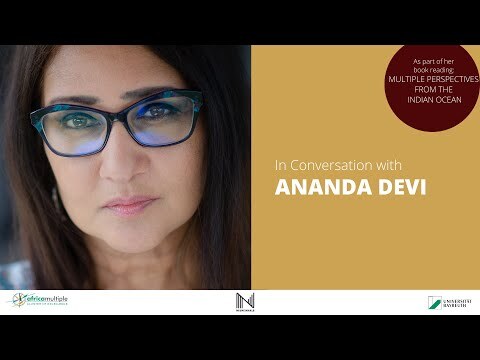
In Conversation with Ananda Devi - Part 1
In July 2022 the Cluster’s department of Internationalisation and Public Engagement organised a book reading with renowned author Ananda Devi. In this interview she talks with Adebanjo Baderin.
Born in 1957 in Mauritius, Ananda Devi began to be noticed at the age of 15 when she won a prize in an international short story. She published her first collection of short stories at the age of 19. Over the next nearly five decades, she has become one of the major literary voices of the Indian Ocean.
Published by the French publishers Gallimard and Grasset, she has won numerous literary prizes. Her writing is characterised by an inner violence and a harsh outlook on modern society, especially regard-ing the status of women. Her characters are trapped by the contrary forces of society, religion, human cruelty, and the seismic faults of history. Their only recourse, in their solitary quest, is their lucidity and humanity. Despite the harshness of her themes, Ananda Devi brings to her writing a poetry and sensuality that shines a light in the midst of the darkness she explores.
She has been translated in several languages and has received decorations from Mauritius, and from France, with the title of Officier des Arts et des Let-tres. In 2014 she received a major award from the Académie Française. The University of Silesia, Po-land, conferred upon her a Honoris Causa doctor-ate.
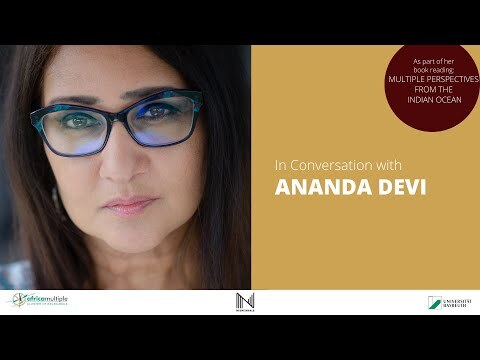
In Conversation with Ananda Devi Part 2
In July 2022 the Cluster’s department of Internationalisation and Public Engagement organised a book reading with renowned author Ananda Devi. In this interview she talks with Jelena Mijajlovic.
Born in 1957 in Mauritius, Ananda Devi began to be noticed at the age of 15 when she won a prize in an international short story. She published her first collection of short stories at the age of 19. Over the next nearly five decades, she has become one of the major literary voices of the Indian Ocean.
Published by the French publishers Gallimard and Grasset, she has won numerous literary prizes. Her writing is characterised by an inner violence and a harsh outlook on modern society, especially regard-ing the status of women. Her characters are trapped by the contrary forces of society, religion, human cruelty, and the seismic faults of history. Their only recourse, in their solitary quest, is their lucidity and humanity. Despite the harshness of her themes, Ananda Devi brings to her writing a poetry and sensuality that shines a light in the midst of the darkness she explores.
She has been translated in several languages and has received decorations from Mauritius, and from France, with the title of Officier des Arts et des Let-tres. In 2014 she received a major award from the Académie Française. The University of Silesia, Po-land, conferred upon her a Honoris Causa doctor-ate.
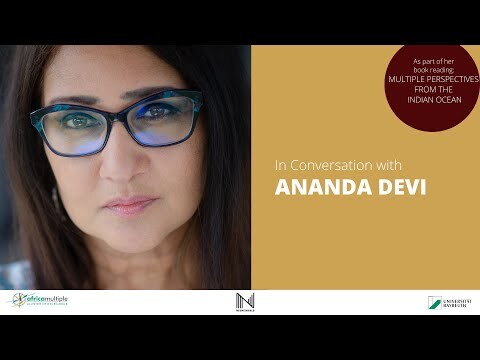
In Conversation with Ananda Devi Part 3
In July 2022 the Cluster’s department of Internationalisation and Public Engagement organised a book reading with renowned author Ananda Devi. In this interview she talks with Prof. Dr. Ute Fendler, Deputy Spokesperson of the Cluster.
Born in 1957 in Mauritius, Ananda Devi began to be noticed at the age of 15 when she won a prize in an international short story. She published her first collection of short stories at the age of 19. Over the next nearly five decades, she has become one of the major literary voices of the Indian Ocean.
Published by the French publishers Gallimard and Grasset, she has won numerous literary prizes. Her writing is characterised by an inner violence and a harsh outlook on modern society, especially regard-ing the status of women. Her characters are trapped by the contrary forces of society, religion, human cruelty, and the seismic faults of history. Their only recourse, in their solitary quest, is their lucidity and humanity. Despite the harshness of her themes, Ananda Devi brings to her writing a poetry and sensuality that shines a light in the midst of the darkness she explores.
She has been translated in several languages and has received decorations from Mauritius, and from France, with the title of Officier des Arts et des Let-tres. In 2014 she received a major award from the Académie Française. The University of Silesia, Po-land, conferred upon her a Honoris Causa doctor-ate.
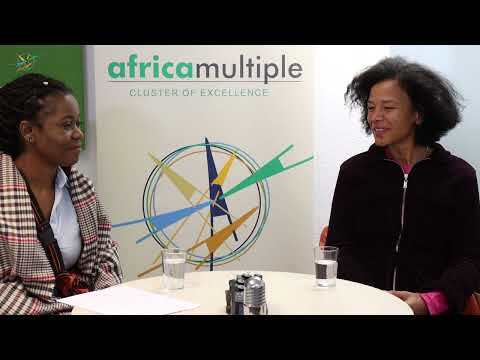
In Conversation with Filmmaker Ines Johnson-Spain
In October 2022, the Africa Mulitple Cluster of Excellence invited filmmaker Ines Johnson-Spain to show her film "Becoming Black" for a group of young students. The discussion that ensued was both interesting and enlightening with the students asking questions about the porcess of making a movie to societal questions about racism. Later that day, the filmmaker sat down with PhD student Marie Tsogo to discuss her movie and biography.
In her autobiographical documentary "Becoming Black" Ines Johnson-Spain takes the audience on the route of discovery of her roots and paternal family after having grown up in the German Democratic Republic.
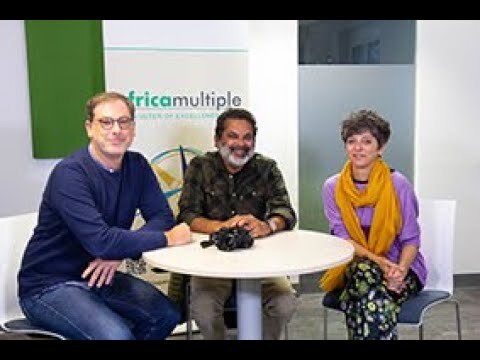
In Conversation with Sérgio Santimano
Pedro Pombo and Elena Brugioni in conversation with Mozambican photographer Sérgio Santimano who visited the Africa Multiple Cluster of Excellence to attend the opening of his exhibition "Goa/Mozambique - Crossed Glances" in Bayreuth.
About the artist:
Born in Mozambique in 1956 and a native of Goa, Sérgio Santimano contributed significantly as a photographer to the creation of a Mozambican identity after the country's independence in 1975. In 1995, he visited India as an adult and presented an exhibition in Mumbai titled "Caminhos - the long and winding road" with a text by Calane da Silva. His photographs taken in Goa and in the northern provinces of Mozambique (Nacala, Niassa, Cabo Delgado and the island of Mozambique) tell the story of the memories of families living on both sides of the Indian Ocean.
Mozambican history testifies of the linkages between the East African coast, Arabia, India. Due to portuguese colonial history, there are very strong linkages between Goa (India) and Mozambique with continuous migrating movements between the two colonies. Identities were evolving in this large contact zone as ongoing processes of dynamic encounters.
The work of Sergio Santimano gives an insight into the crossing gazes across the Indian Ocean: “olhares cruzados”, “Blickwechsel”. Recent Exhibitions of Sergio Santimano include “Legado” (2018-2019, Maputo, Goa); “Portas para Goa” (2021, Castelo de Vide)
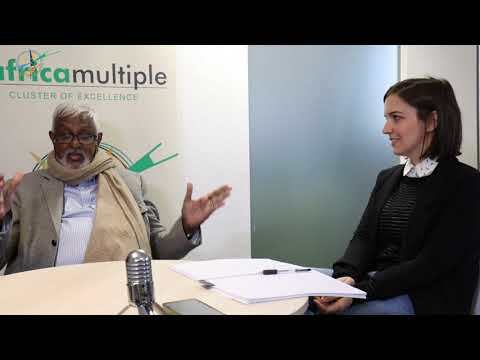
INTERMEDIAL INDIAN OCEAN - In Conversation with Harrikrisna Anenden
As part of the Indian Ocean events in November 2021, director Harrikrisna Anenden was a guest of the Africa Multiple Cluster of Excellence in Bayreuth. In this interview, he talks with Prof. Dr. Ute Fendler, Deputy Spokesperson of the Cluster, and Jelena Mijajlovic about his film "Draupadi's Veil".
The director from Mauritius received his training in Nairobi, Antwerp and London. Harrikrisna has been working as a filmmaker since 2005 and has since then directed both documentaries and feature films across Africa and in India, such as the award-winning feature films The Cathedral (2006) and The Children of Troumaron (2012, co-directed with Sharvan Anenden), which are both based on the writings of the Mauritian author Ananda Devi and portray life in Port-Luis – the capital of Mauritius. His film "Draupadi's Veil" is about a mother's sacrifice to save her son who has come down with a serious case of meningitis.
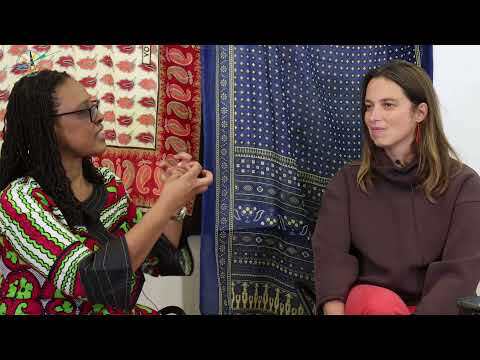
INTERMEDIAL INDIAN OCEAN - In Conversation with Mshai Mwangola
As part of the Indian Ocean events in November 2021, Dr. Mshai Mwangola, Ph.D., was a guest of the Africa Multiple Cluster of Excellence in Bayreuth. In this interview, she talks with Clarissa Vierke, Professor of Literatures in African Languages at the @unibayreuth, about her performance lecture and her kanga workshop.
Mshai holds a PhD in Performance Studies from Northwestern University (USA). Her thesis on Kenya’s “Uhuru Generation”, titled ‘Performing Our Stories, Performing OurSelves’, approaches the idea of a generational historical mission through the re-creation, invocation and facilitation of performance as a site of individual and communal reflection. Mshaï's pedagogy, research and creative work is grounded in understanding performance as both the process and product of meaning-making. In her performance lecture for the Intermedial Indian Ocean Event entitled "Hadithi Njoo: Leso as Palimpseston" she talked about the history of the evolution of leso as well as some of the social, cultural and political uses of this textile.
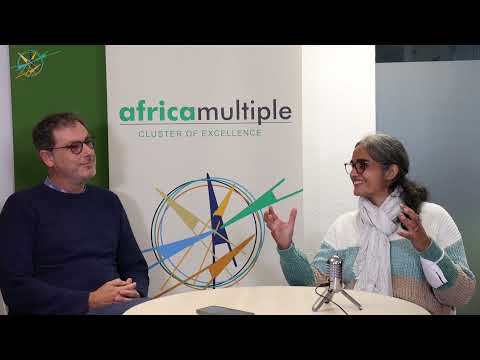
INTERMEDIAL INDIAN OCEAN - In Conversation with Nalini de Sousa & Pedro Pombo
As part of the Indian Ocean events in November 2021, filmmaker Nalini Elvino De Sousa and anthropologist Pedro Pombo were guests of the Africa Multiple Cluster of Excellence in Bayreuth. In this interview, they talk with Prof. Dr. Ute Fendler, Deputy Spokesperson of the Cluster, and Clarissa Vierke, Professor of Literatures in African Languages at the University of Bayreuth, about their documentary film “The Club”.
"The Club" portrays the life of Goans in Tanzania and the cultural club that united them. The film team followed families recounting their memories of the club in Dar es Salaam, from the traditions that were maintained there to the music they listened to together.
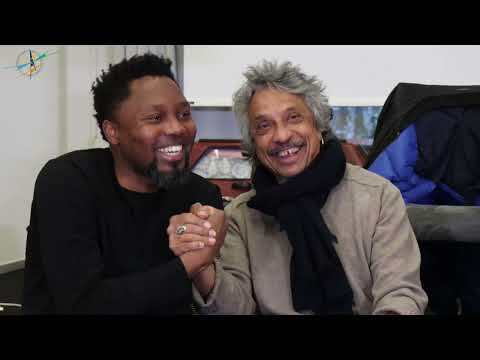
INTERMEDIAL INDIAN OCEAN - In Conversation with Tao Ravao & Luis Sala
As part of the Indian Ocean events in November 2021, choreographer and dancer Luis Sala and musician Tao Ravao were guests of the Africa Multiple Cluster of Excellence in Bayreuth. In this interview, they talk with Prof. Dr. Ute Fendler, Deputy Spokesperson of the Cluster, about sounds and movements.
Luis Sala is a choreographer and dancer from Maputo where he runs a dance school. His 25-year long career includes a 10-year stint with the renowned National Dance Company of Mozambique. He collaborated on various projects in the Bayreuth Academy of Advanced African Studies on Iconographies. Together with Ute Fendler and Ivan Barros (photographer, filmmaker), he created a video clip and dance performance capturing the polyrhythmic nature of the Indian Ocean.
Tao Ravao is a musician based in France, playing Valiha, guitar and mandolin. Born in Madagascar, Ravao had always been fascinated by the music of the big island and the multi-instrumentalist took up playing the kabosy in the 1980s which took him around the world (Canada, the United States, Japan, East Africa). His love for Malagasy music led Tao Ravao to become the artistic director and producer of albums by the great D'Gary and Jean Emilien, Senge and Rajery. He has also produced the albums of Ba Cissoko and Sékou Diabaté of Bembeya Jazz. In 2016 he collaborated with Luis Sala on the project “Body and Sound”.
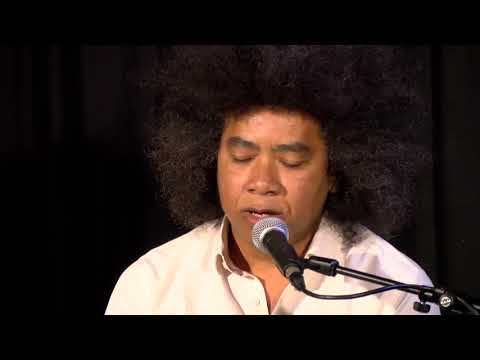
Lecture Musicale by Raharimanana: "Les îles témoins et les mémoires tissées"
In December 2021, the Africa Multiple Cluster of Excellence hosted a special evening at @kunst-undkulturhausneunein8931: LECTURE MUSICALE with musician and poet Raharimanana.
Raharimanana reads, on the notes of his marovany, Malagasy harp, extracts from his books Tisser, (éditions Mémoire d’encrier, 2021), and Le Voi, le Loin, 100 poèmes (editions Vents dailleurs, 2021).
Witness-Islands and (en)Tangled Memories.
From the movements of the worlds, the islands were formed. Convergence of currents. Utopia of the breaths. Raharimanana is aware of the influx of sources in him. Multiple origins, Africa, Asia, the West. An archipelagic identity where history is sometimes violent, but culture always heals and restores.
Poetry, music. Reintegrate the fullness of the world and reconnect with the body. To shiver. To be attentive. Drawing from the myths of the Big Island to write a contemporary fable where the ancestors teach the place of the human, living among the living, "humus of the Earth". Describing the dreams of excess of some and the quest for freedom of others. To live then as fibers to weave humanity.
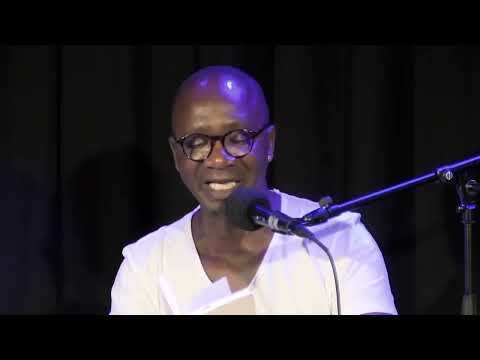
Literary readings and discussions with Wilfried N'Sondé and Kangni Alem
Slavery in history, memory and literature: an African perspective
As part of the workshop "Slave Trade Memories at the Crossroads of Literature, Performance and History" in June 2022 the Africa Cluster of Excellence hosted this reading and discussion with Wilfried N'Sondé and Kangni Alem at @kunst-undkulturhausneunein8931. The event was moderated by Josias Semujanga and Thierry Boudjekeu.
Born in Lomé, Togo, in 1966, Kangni Alem is a writer, translator and literary critic, playwright, art collector and exhibition curator, director of the "Atelier Théâtre de Lomé" founded by him in 1989. He has received numerous awards, including the Grand prix littéraire d'Afrique noire for his book Cola Cola jazz, the Tchicaya U'Tamsi Prize of the Concours Théâtral Interafricain for his play Chemins de Croix and more recently the 3rd Prize of the Williams Sassine Literary Prize for his short story Une histoire américaine. He is an associate researcher at the CELFA (Centre d'Études Linguistiques et Littéraires Francophones et Africaines) at the University of Bordeaux III and is currently editor-in-chief of the review Notre Librairie and translator of the writer Ken Saro-Wiwa. Kangni Alem is a lecturer in comparative literature and theatre pedagogy at the University of Lomé. He directs the professional Master's programme, and has been working for the last few years on the mediation between literature, visual arts and performance.
Wilfried N’Sondé is a prolific writer, musician, author and composer. Born in 1968 in Brazzaville, he studied political science in Paris before moving to Berlin, where he stayed for 25 years. He now lives in Lyon. In 2016, he taught literature at the University of Bern as a visiting professor. He is currently a lecturer at the University of Mayotte. As a writer, he publishes his work with Actes Sud, and his novels have been translated into several languages. He has won several renowned awards, including the Prix des Cinq Continents de la Francophonie and the Prix Senghor de la création littéraire for Le Cœur des enfants léopards (2007), the Prix Ahmadou Kourouma for Le silence des esprits. And numerous other awards for Fleur de béton (2012) and Berlinoise (2015) and Un océan, deux mers, trois continents (2018). His most recent novel is entitled Femme du ciel et des tempêtes.
Migration Control, Forced Immobility and Violent Mobilization in West Africa - Cluster Project
Prof. Dr. Doevenspeck talks about his short term Cluster project: "Migration control, forced immobility and violent mobilization in the border triangle of Burkina Faso, Benin and Niger" that ran from Nov. 2019 to Oct 2020.
Find more information here: https://www.africamultiple.uni-bayreuth.de/en/Research/1research-sections/mobilities/Migration-control_/index.html
Moral Geographies of Re-Existence - Projects of the Cluster
Our research project sheds light on the ways in which Afro-descendant communities resist and re-exist in postcolonial and post-slavery Latin America. We focus on Salvador da Bahia (Brazil) and Cartagena de Indias (Colombia), two major arrival ports of the transatlantic slave trade. These traumatic places of enslavement and colonization are still marked by racial discrimination and socio-spatial exclusion. At the same time, their colonial city centres are recognised as UNESCO World Heritage, attracting thousands of tourists every year. In this ambivalent context, we focus on peri-urban neighbourhoods which tend to be ‘off the map’ of many tourists, researchers and political actors. In the face of violence and poverty, their dwellers are often stigmatised across-the-board as if they were morally inferior and incapable of fostering a peaceful social transformation. In contrast, we assume that their self-organised socio-cultural projects may not only (re)valorise Afro-descendant identities and life-worlds, but also change people’s strong evaluations of what is right and good, altering their visions of a good life.
Presented by Prof. Dr. Rothfuß
#geography #brazil #philosophy #postcolonialism #moralities #unibayreuth #universityofbayreuth
Narratives from Africa and the Diaspora: Filmaking in Africa
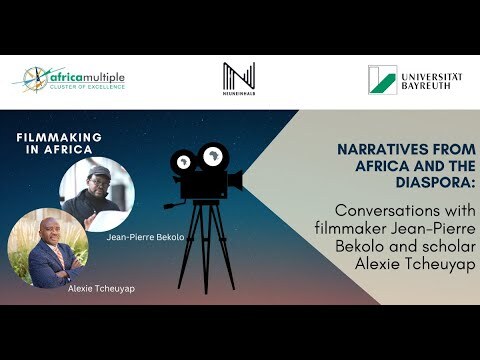
In April 2023 the Africa Multiple Cluster of Excellence hosted this conversation with filmmaker Jean-Pierre Bekolo and scholar Alexie Tcheuyap at @kunst-undkulturhausneunein8931.
Jean-Pierre Bekolo is a filmmaker from Cameroon. He is considered to be one of the avant-garde filmmakers from the continent with a large oeuvre of 30 years suggesting each time new topics and new approaches to film genres and narrative modes.
Alexie Tcheuyap is Professor of French and Postcolonial Studies at the University of Toronto, where is hold the position of Associate Vice-President & Vice-Provost. He has published extensively on the subject of African literatures, film and media, and is a member of the Royal Society of Canada.
New Year Lecture 2021 - Prof. Dr. Ute Fendler
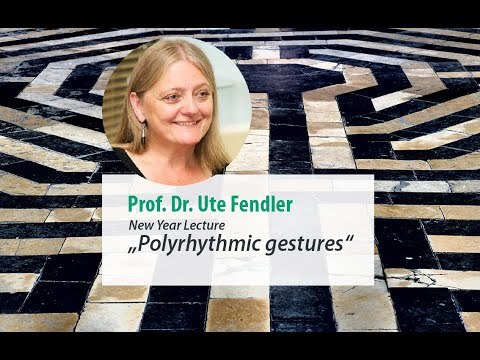
Prof. Ute Fendler delivers her Lecture on "Polyrhythmic gestures - Relational Perspectives on/from verbal, audio/visual and performative arts across the African continent".
It was held on 14 January 2021 as the first academic event of the Cluster of Excellence in the new year.
The Cluster’s spokesperson Prof. Dr. Ute Fendler engaged with the key term of relationality by combining concepts from Glissant’s poetics of relation as well as from Deleuze’s polyrhythm, Benítez Rojo’s concept of "chaos" and Brathwaite’s “tidalectics”. All of them suggest ways of approaching multiple and complex ways of being in the world. The lecture put them in dialogue with concepts suggested by Senghor on „rhythm“ in the new readings by Bachir Diagne and also by Babacar M. Diop. Furthermore, Ute Fendler drew on Vilem Flusser’s "gestures" as symbolic gestures to discuss some examples from verbal, visual and performative art works that allow us to navigate the entanglements between theory and practice, like e.g. poem/songs by Raharimanana (Madagascar), music/films by Moussa Sène Absa (Senegal), and dance/calligraphy.
The lecture had been planned as a dialogic lecture with artists, but due to the pandemic, the whole event had to be recorded beforehand. Prof. Fendler: "I would like to thank Mr Makhoukh who accepted to give an interview on his work and his thoughts on the key concepts “polyrhythm” and “relationality”. I would also like to thank Dr. Driss ElMaarouf who did the interview in Fes and also Farouk ElMaarouf who did the postproduction and the subtitles. Furthermore, I would like to thank Raharimanan for sharing the link to the concert that can be seen on vimeo and of which I showed a part as he could not come to Bayreuth." The video of the dance-calligraphy is a short part of the video on the site: https://www.streamsandmountains.com/the-calligraphy-of-dance.
New Year Lecture 2021 by Prof. Dr. Ute Fendler
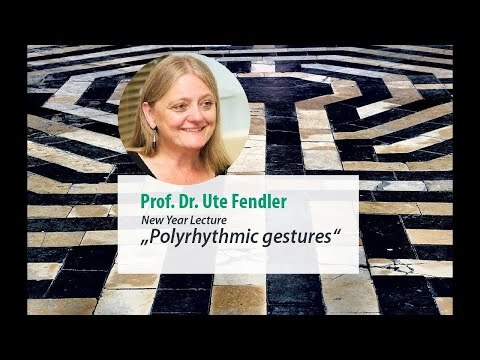
Prof. Ute Fendler delivers her Lecture on "Polyrhythmic gestures - Relational Perspectives on/from verbal, audio/visual and performative arts across the African continent".
It was held on 14 January 2021 as the first academic event of the Cluster of Excellence in the new year.
The Cluster’s spokesperson Prof. Dr. Ute Fendler engaged with the key term of relationality by combining concepts from Glissant’s poetics of relation as well as from Deleuze’s polyrhythm, Benítez Rojo’s concept of "chaos" and Brathwaite’s "tidalectics". All of them suggest ways of approaching multiple and complex ways of being in the world. The lecture put them in dialogue with concepts suggested by Senghor on "rhythm" in the new readings by Bachir Diagne and also by Babacar M. Diop. Furthermore, Ute Fendler drew on Vilem Flusser’s "gestures" as symbolic gestures to discuss some examples from verbal, visual and performative art works that allow us to navigate the entanglements between theory and practice, like e.g. poem/songs by Raharimanana (Madagascar), music/films by Moussa Sène Absa (Senegal), and dance/calligraphy.
The lecture had been planned as a dialogic lecture with artists, but due to the pandemic, the whole event had to be recorded beforehand. Prof. Fendler: "I would like to thank Mr. Makhoukh who accepted to give an interview on his work and his thoughts on the key concepts “polyrhythm” and “relationality”. I would also like to thank Dr. Driss ElMaarouf who did the interview in Fes and also Farouk ElMaarouf who did the postproduction and the subtitles. Furthermore, I would like to thank Raharimanan for sharing the link to the concert that can be seen on vimeo and of which I showed a part as he could not come to Bayreuth."
The video of the dance-calligraphy is a short part of the video on the site: https://www.streamsandmountains.com/the-calligraphy-of-dance
Link to Raharimanan's poem: https://vimeo.com/208144946
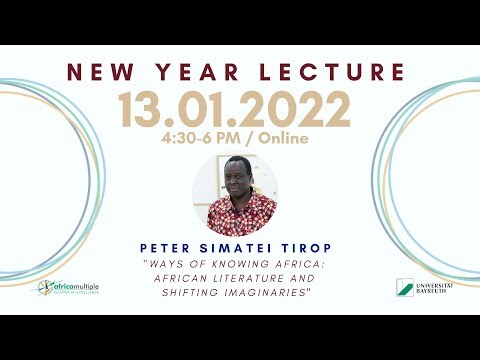
New Year Lecture 2022 - Prof. Dr. Peter Simatei Tirop
Each year, the Africa Multiple Cluster of Excellence at the University of Bayreuth starts its line of annual activities and events with the New Year Lecture open to the interested public, featuring prominent speakers who address questions and concepts central to the Cluster’s agenda. In 2022 the COVID-19 pandemic forced the Cluster again to move the New Year Lecture to a digital format.
On 13 January 2022 the New Year Lecture was delivered by Prof. Dr. Peter Simatei Tirop, Director of the Moi African Cluster Centre, Professor of Comparative Literature, Dean, School of Arts and Social Sciences at Moi University in Eldoret, Kenya. It was entitled "Ways of Knowing Africa: African Literature and Shifting Imaginaries".
Programme:
Welcome address
Yacouba Banhoro
Director of the Ouaga African Cluster Centre, Professor of History, Joseph Ki-Zerbo University, Ouagadougou, Burkina Faso
Introduction
Akosua Adomako Ampofo
Spokesperson of the Cluster's Advisory Board, Professor of African and Gender Studies, Institute of African Studies, University of Ghana, Accra
Lecture
Peter Simatei
Director of the Moi African Cluster Centre, Professor of Comparative Literature, Dean, School of Arts and Social Sciences, Moi University, Eldoret, Kenya
www.africamultiple.uni-bayreuth.de
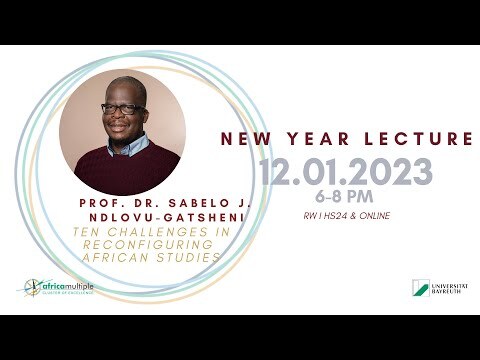
New Year Lecture 2023 - Prof. Dr. Sabelo J. Ndlovu-Gatsheni
Each year, the Africa Multiple Cluster of Excellence starts its line of annual activities and events with the New Year Lecture open to the interested public, featuring prominent speakers who address questions and concepts central to the Cluster’s agenda. After two years of Covid restrictions the 2023 New Year Lecture could finally be held in presence again.
On 12 January 2023, the New Year Lecture was delivered by Prof. Dr. Sabelo J. Ndlovu-Gatsheni, Chair in Epistemologies of the Global South. It was entitled "Ten Challenges in Reconfiguring African Studies".
Programme:
Welcome address
Prof. Dr. Nina Nestler
Vice President for Internationalization, Gender Equality & Diversity, Chair of Criminal Law, University of Bayreuth
Introduction
Dr. Christine Vogt-William
Director Gender & Diversity Office Africa Multiple Cluster of Excellence University of Bayreuth
Lecture
Prof. Dr. Sabelo J. Ndlovu-Gatsheni
Chair in Epistemologies of the Global South
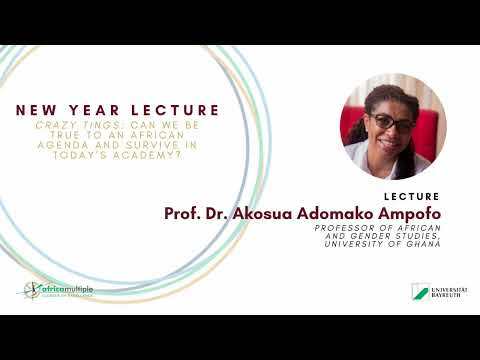
New Year Lecture 2024 - Prof. Dr. Akosua Adomako Ampofo
Each year, the Africa Multiple Cluster of Excellence starts its line of annual activities and events with the New Year Lecture open to the interested public, featuring prominent speakers who address questions and concepts central to the Cluster’s agenda.
The fifth annual New Year was held by Prof. Dr. Akosua Adomako Ampofo, Professor for Gender Studies and African Studies at the University of Ghana, and was entitled: "Crazy Tings: Can we be true to an African Agenda and Survive in today's Academy?"
About the Lecture:
Music is experienced and understood as an integral part of our self identity; it is closely linked with personal memories and significant moments of history, it is a form of self-expression of who we how we feel. Taking a slice out of Nigerian singer Tems’ book, Prof. Ampofo employed Tems' song, "Crazy Tings", as a metaphor to evoke the image of the multiple crazy things that abound in the academy, which is situated in a crazy world. She also reflected on how we might seek an intellectual engagement that serves Global Africa’s interests while ensuring that we are not destroyed in the process, and can hopefully even thrive.
THE LECTURE IS TRANSLATED IN BRITISH SIGN LANGUAGE!
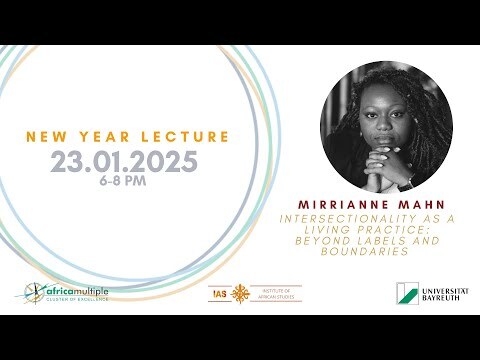
New Year Lecture 2025: Intersectionality as a Living Practice: Beyond Labels and Boundaries
Each year, the Africa Multiple Cluster of Excellence starts its line of annual activities and events with the New Year Lecture open to the interested public, featuring prominent speakers who address questions and concepts central to the Cluster’s agenda. The sixth annual New Year lecture took place on 23 January 2025 on the campus of the University of Bayreuth.
It was held by Mirrianne Mahn, political activist, author, theatre person, city councilor in Frankfurt am Main and freelance consultant for diversity development and was entitled: Intersectionality as a Living Practice: Beyond Labels and Boundaries
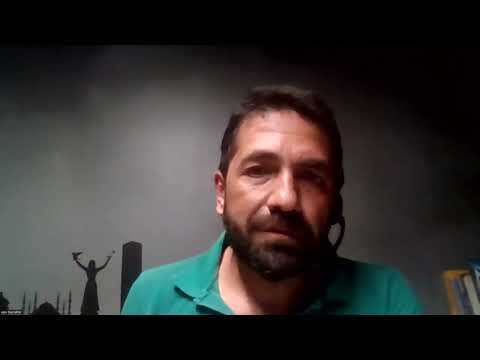
Okwui Enwezor 2023 - Kültürhane: Hope in the Age of Compost
For the third time, the Cluster of Excellence organised the Okwui Enwezor Distinguished Lecture in July 2023. Established in the memory of late art curator Okwui Enwezor, each year the lecture series presents a prominent artist, curator, or scholar who engages with ground-breaking contributions to the rethinking of arts in a global perspective.
On July 19 2023, the Okwui enwzeor distinguished Lecture featured the founders of Kültürhane, an activist community in Turkey. The lecture was entitled "Hope in the Age of Compost"
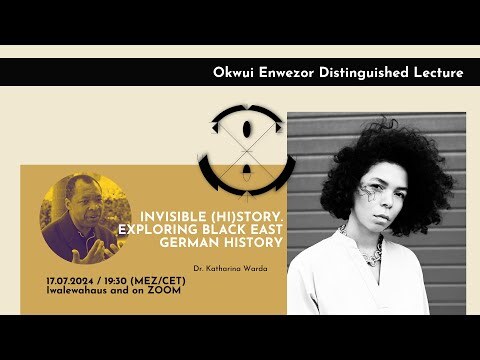
Okwui Enwezor Distinguished Lecture 2024 - Invisible (Hi)Story. Exploring Black East German History
The Fourth Okwui Enwezor Distinguished Lecture 2024 took place on 17 July 2024 and was held by Dr. Katharina Warda. It was entitled "Invisible (Hi)Story. Exploring Black East German History".
German history is for the most part a white and West German history. The history of the GDR and East Germany after 1990 mostly appears as marginal notes. Black history is highly contested and mostly an intellectual experiment rather than anchored in German history. But what happens when the two marginalized narratives intersect? Black East German history emerges as a void, a blank space. Their individuals are doubly invisible – their stories, experiences and perspectives are virtually non-existent. Yet this doubly neglected part of German history not only contains complex histories between Blackness, socialism and internationalism. As part of East German history of color, these histories and perspectives shed a completely different light on current narratives of the Cold War and the ongoing political shift to the right.
About the lecture series
The Okwui Enwezor Distinguished Lecture annually features a prominent artist, curator, or scholars, individuals or collectives, who will engage with groundbreaking contributions to the rethinking of the role of arts and culture in a global perspective and celebrate the legacy of curator, historian, an poet Okwui Enwezor (1963–2019). Lecturers in 2021 and 2022 have been Prof Chika Okeke-Agulu, as well as the curatorial duo Nantume Violet and the late Ijeoma Uche-Okeke, represented by Asele Institute.
Find out more about the Cluster of Excellence here: https://www.africamultiple.uni-bayreuth.de/en/index.html
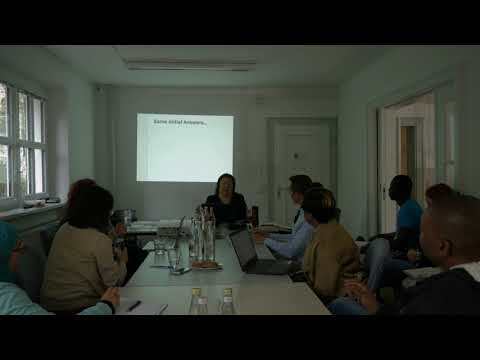
Panel Discussion: Intersectionality | September 19, 2019
Prof. Sumi Cho gives an Introduction to Intersectionality at University of Bayreuth, September 19, 2019
-
Follow us on Social Media:
Facebook - https://www.facebook.com/pg/AfricaMultiple
Instagram - https://www.instagram.com/exc2052/
Twitter - https://twitter.com/ClusterAfrica
https://www.africamultiple.uni-bayreuth.de/
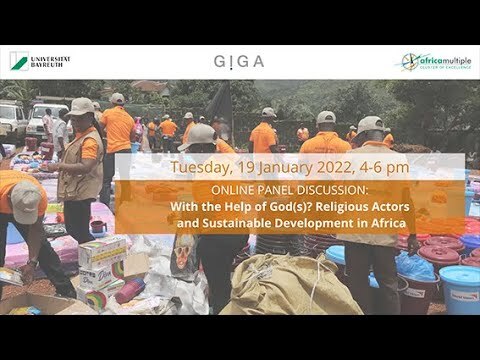
Panel Discussion: With the Help of God(s)? Religious Actors and Sustainable Development in Africa
On 19 January 2022, the Africa Multiple Cluster of Excellence, University of Bayreuth & The German Institute for Global and Area Studies (GIGA), Hamburg presented the
Public online panel discussion
“With the Help of God(s)? Religious Actors and Sustainable Development in Africa”
On the African continent and elsewhere faith-based organizations provide health care services, religious groups offer education to kids and young adults, and religious leaders act as conflict mediators. At the same time, we hear about radical Christians performing crusades or Jihadi groups attacking villagers. Religious actors seem to be able to foster as well as undermine sustainable development. Today, a majority of African political leaders, Western governments, international organizations, and (I)NGOs acknowledge the relevant role of religious actors to bring about sustainable development and put great hope in their potential. What are these hopes based on? How do religion and sustainable development connect? Do they connect at all? And what challenges arise when religion and politics go hand in hand?
For the online panel discussion "With the Help of God(s)? Religious Actors and Sustainable Development in Africa" the Africa Multiple Cluster of Excellence and GIGA invited the following participants:
Panel:
+ Damaris Parsitau (Egerton University, Njoro & African Association for the Study of Religion)
+ Eric Stollenwerk / Matthias Basedau (GIGA, Hamburg)
+ Eva Spies (Africa Multiple Cluster of Excellence, University of Bayreuth)
Commentators/discussants:
+ Nabiela Farouq-Martius (GIZ)
+ Daniel Salau Rogei (Carleton University, Ottawa)
Chair: Paula Schrode (Africa Multiple Cluster of Excellence, University of Bayreuth)
Introduction: Doris Löhr (Africa Multiple Cluster of Excellence, University of Bayreuth)
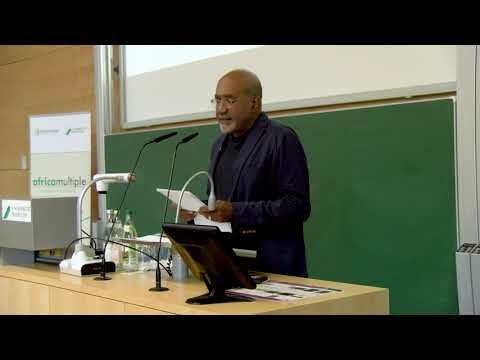
Patrick Chamoiseau - Poétiques de la Relation | October 30, 2019
Patrick Chamoiseau, one of the most important and innovative author of francophone Literature, was invited to present his paper ' Poétiques de la Relation' at the International Conference - “Africa Multiple: Conversations and Building Networks” of University of Bayreuth on October 30, 2019. The conference was designed as a venue to start conversations between representatives from the various institutions that form part of the cluster’s network. The themes selected for the conversations are high on the cluster’s agenda and also at the heart of debates in African Studies today: the premises of knowledge production, African Studies and the question of diasporas, gender and diversity in African Studies, and African Studies in the digital age.
-
Follow us on Social Media:
Facebook - https://www.facebook.com/pg/AfricaMultiple
Instagram - https://www.instagram.com/exc2052/
Twitter - https://twitter.com/ClusterAfrica
https://www.africamultiple.uni-bayreuth.de/